Dear Cosme,
You got the bug in me, so now you get to hear me ramble about this for a GOOD while.
Before any of the theory, the gear, or the recipes, you should know how I got into this in the first place. It’s a slightly ridiculous story, because the punchline is that I don’t even like beer.
The Call at 11 p.m.
About ten years ago, when I was studying in Minas, I knew two brothers who had started a small brewery called Gloriosa. The younger one was Gabriel, but everyone called him Gabs.
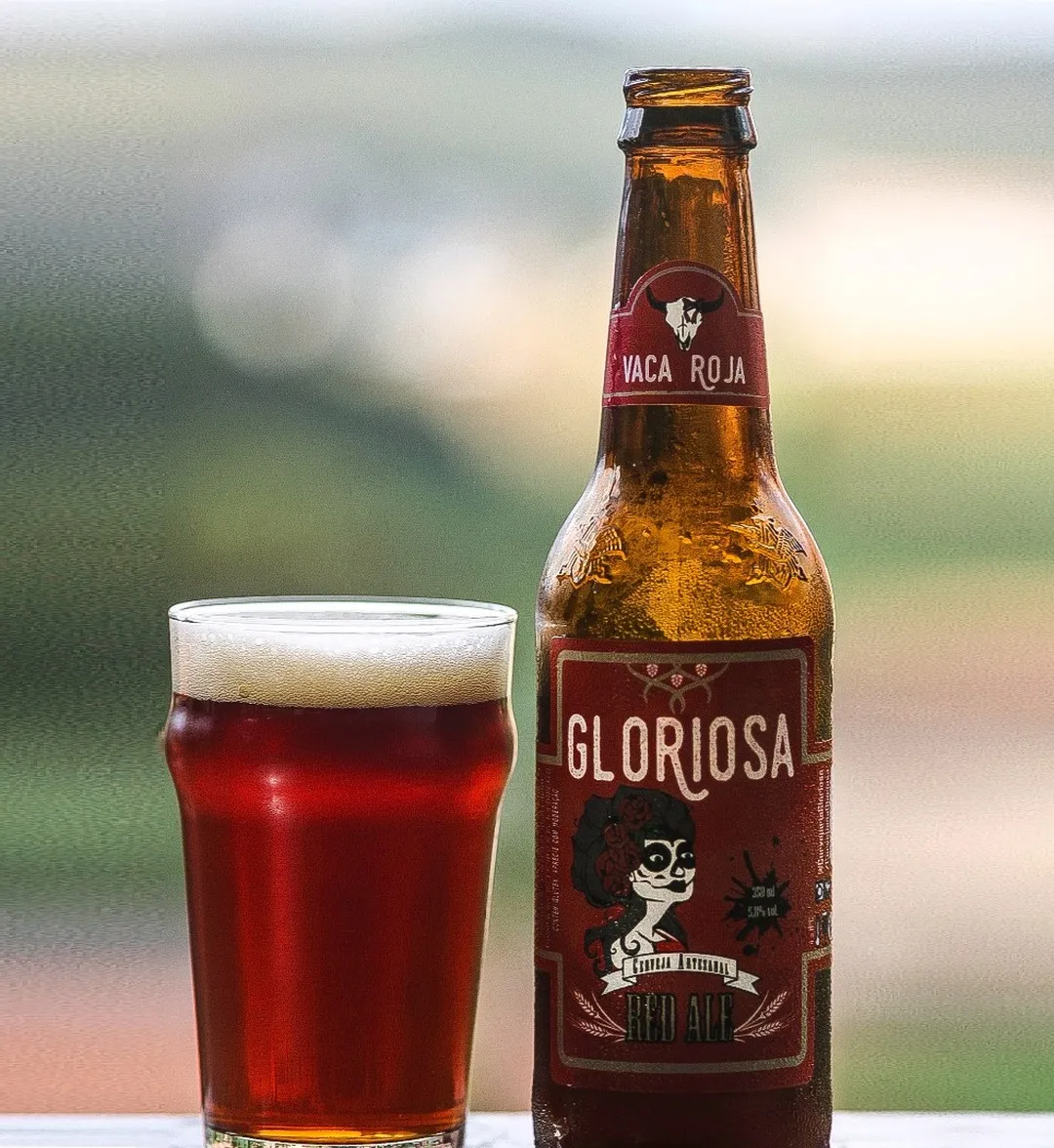 Photo: @cervejariagloriosa
One random night, around 11, Gabs called and asked if I was awake and whether I was planning to sleep anytime soon. He knew I stayed up late, so it wasn’t really a question. He had a batch that needed to be brewed that night, his brother had to leave town for an emergency, and he needed another pair of hands.
I told him the truth: I don’t drink beer. But I was curious as fuck, so, sure. Let’s go.
The brothers picked me up, and the first stop wasn’t the brewery. It was a spring. They had a secret spot where water came right out of the mountains of Minas Gerais, and that’s where their brewing water came from. We filled a few jugs, drove back to Gabs’ place, and his brother took the car and left on his trip.
Then the actual work started.
Hurry Up and Wait
Brewing starts with something that doesn’t feel like brewing at all: you fill a big fucking pot with water and heat it. That’s the strike water.
While it heats, you mill the malt, and of course you ask to try it. That was the first surprise: malt is delicious. It’s sweet and a little crunchy, somewhere between a grain, sugar, and peanuts. I could have snacked on it all night.
As for the milling, Gabs’ tale is that in the beginning of the brewery, all they had was a retro hand-cranked coffee grinder, and he and his brother would spend 30 to 40 minutes milling by hand. I got the posh version. By then they’d bought a two-roller malt mill and drove it with a drill, so there was no effort at all, and it took about five minutes for I can’t even remember how many kilos of malt.
Gabs explained that a recipe uses different malts for different jobs. The base malt is the bulk of the grain bill. It supplies most of the sugar and the enzymes that make that sugar. The specialty malts go in by the handful and give the beer its color, body, and character.
Once the water hit temperature, the grain went in, and I learned the rhythm of brew day: do a bunch of shit, then wait. Do a bunch of shit, then wait.
He skipped the protein rest (around 50°C) and did a step mash instead:
- ~63–65°C, the beta-amylase rest. Beta-amylase nibbles starch into small, highly fermentable sugars. Spend more time here and you get a drier, stronger beer.
- ~68–72°C, the alpha-amylase rest. Alpha-amylase chops starch into bigger chunks, some of which the yeast can’t eat. Spend more time here and you get more body and residual sweetness.
- ~76–78°C, the mash out. This denatures the enzymes to lock in the sugar profile and thins the mash so it drains better.
The sweet liquid you rinse out of the grain (that step is the lauter) is the wort. From there it goes into the boil kettle, and the boil is where the hops go in.
Of course I asked to try a hop too. That was the second surprise: hops are awful. Bitter, resinous, grassy, just aggressive. I’m convinced that’s the whole reason I don’t like beer. Everything before the hops tastes amazing, and then you ruin it on purpose.
Sixty Liters and No Pumps
By then a few hours had gone by, and it’s exhausting. We were moving about 60 liters from pot to pot to pot on a gravity system. There were no pumps, just height, hoses, and our arms. Whenever the burner was on, so were we. You keep stirring the whole time so nothing scorches on the bottom.
Right when you’re at your most tired, near the end of the boil, you drop in the immersion wort chiller. It sits in the boiling wort for the last ten minutes or so, which sanitizes it. Around the same time goes the final hop addition, about five minutes before flameout. Then you kill the fire, run cold water through the coil, and wait for all that liquid to come down to pitching temperature, which is not “cool enough that you won’t burn your hand.” The textbook number for a typical ale yeast is around 18–20°C. Gabs pitched warmer, around 28–30°C, and if I remember right, his reasoning was that it’s an ale and Mariana (the city in Minas Gerais) swings between about 16 and 28°C, so that’s a temperature the yeast would see every day anyway.
The Yeast, and the Best Hack of the Night
I skipped a step, and it’s an important one. Somewhere in the middle of all this, you have to look after the yeast.
Yeast is weirdly expensive. It was something like R$20 for a packet of a few grams, so you want to make that shit last, so Gabs made a yeast starter: an Erlenmeyer flask with water, some fermentable sugar, and a pinch of yeast nutrient. The yeast multiplies in there, and you pitch a much bigger, healthier population into the beer instead of a tiny little packet.
Now the part that won me over. They had built their own magnetic stir plate. They took an old PC fan, cut the blades off, glued magnets to the hub, and set the flask on top. Inside the flask was a magnetic stir bar, a peixinho. Power the fan and the peixinho spins, keeping the starter moving and oxygenated while you go deal with the next pot. (God, I LOVE Brazilian gambiarras.)
Once the wort was down to temperature, it went into the fermenter, the starter went in, the lid went on with an airlock, and that was it.
The call came at 11 p.m. Between fetching water, milling, mashing, lautering, boiling, chilling, sanitizing everything, and finally sealing the fermenter, it was almost 5 a.m. You skip sleep, drag yourself through the next day, and then sleep like a fucking rock.
Three Weeks Later
Where we lived was on the cooler side, so fermentation took about three weeks. Then Gabs called again, this time with no emergency, to come see how “my” beer turned out and help bottle it.
They didn’t force-carbonate with CO₂ tanks. They did it with priming sugar: a small, measured dose of sugar goes into the beer right before bottling, and the yeast still in suspension eats it inside the sealed bottle. The CO₂ has nowhere to go, so it dissolves into the beer, and that’s your fizz. (Remember small, measured dose. Too much and you’ve made a grenade. We’ll get to bottle bombs.)
He called me to help once more after that. I like to think it was because I was good help and good company.
What I Took From It
I never started liking beer. But I learned to evaluate it. Once you’ve chewed the malt, smelled the hops, and sat through the fermentation, you know what you’re looking for in a glass. You start picking apart the malt notes, the bitterness, the yeast character. I got pretty carried away with analyzing beer, but I never got carried away enjoying it.
Honestly, I’d still like to learn to enjoy it, but I have my particularities, so we’ll see.
What actually hooked me was the process: the timing, the chemistry, the jerry-rigged equipment, and the long night that turns into something you can hold in a bottle weeks later.
Lesson Zero
Before the next letter, here’s the one idea everything else hangs on. Beer, mead, wine, and the wash that becomes cachaça are all the same thing underneath:
Yeast eats sugar and turns it into ethanol and CO₂, plus heat and a shitload of flavor compounds. (Or so I hear, I don’t ACTUALLY know what yeast tastes like or what it brings to the table, but this is the content of another letter.)
Everything else is about controlling that sentence:
- Where the sugar comes from. Malt for beer (that’s what the mash is for: turning starch into sugar), honey for mead, cane juice for cachaça.
- Which yeast, and how healthy it is. That’s the starter and the peixinho.
- Temperature. Too hot and the yeast throws off-flavors or stalls. Too cold and it crawls. Hence three weeks in Minas.
- Keeping everything else out. Yeast isn’t the only thing that loves sugar water, which is why we clean and sanitize obsessively.
- What happens after. Bottling, carbonating, aging, or distilling.
Next letter: the theory and the ingredients, properly this time.
Best, Yago